The AI – Monkey Connection

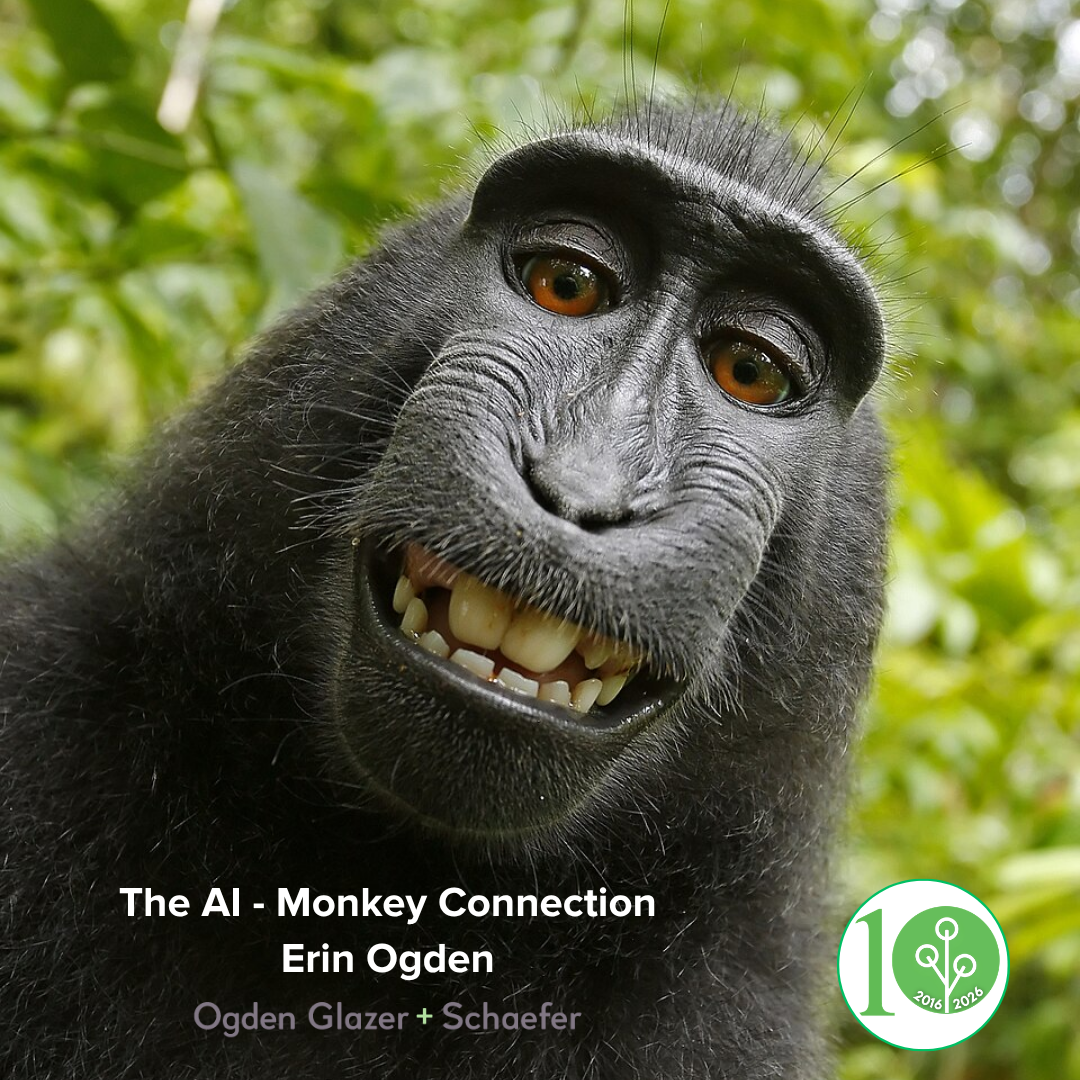
U.S. copyright law protects works created by humans. The Copyright Office will not register content produced entirely by a non-human source. Courts have applied this rule to works attributed to animals, supernatural beings, and natural forces. Not monkeys, not oceans, not even “celestial beings” can own a US copyright. Courts found Naruto the monkey couldn’t … Read more
Copyright in the Age of AI: Anthropic’s Clash with Music Publishers

“Plaintiff Music Publishers, a group of the world’s leading music publishers, bring this action to hold accountable the culprits behind one of the largest and most blatant ongoing thefts of intellectual property in history,” starts the allegation that music publisher’s Sony Music Publishing and Warner Chappell Music have made against Anthropic, an American artificial intelligence … Read more

Avoid the Red Card: What Businesses Need to Know About FIFA’s Intellectual Property Rules During the 2026 World Cup

With the 2026 FIFA World Cup set to be the largest tournament in history, businesses across the United States, Canada, and Mexico are preparing marketing campaigns designed to capitalize on the excitement surrounding the event. However, before incorporating World Cup-themed branding into advertisements, promotions, or social media content, businesses should understand that FIFA aggressively protects … Read more

Infringers Infringe – Not Internet Service Providers

Under the Copyright Act, anyone who violates any of the exclusive rights of the copyright owner is an infringer of the copyright. On top of that, the Supreme Court has also recognized two categories of secondary liability. Secondary liability happens when a party is liable for the copyright infringement of another. Those two categories are “contributory” … Read more

Setting Yourself Up to Own What You Think You Own

There is a common assumption in the business world: If you paid for it, you own it. As laid out in one of Erin’s earlier posts, that is not always a case with IP. To quickly summarize, the default under copyright law is that whoever creates the thing owns the copyright, even if someone else paid to have it created. The exception to this is a “work made for … Read more

AI Made It. Now Who Owns It?

Artificial intelligence (AI) is rapidly becoming a part of the tools we use every day. AI can be found on our computers, our phones, our cars, and beyond. As AI systems grow more advanced, it becomes increasingly appealing to rely on them to generate content, ideas, and even finished works with little to no human … Read more

Skating on Thin Ice: Copyright Challenges at the Winter Olympics

When most of us think about figure skating at the Winter Olympic Games, we picture elite athletes, dramatic performances, and unforgettable routines. However, in recent years, an important issue has emerged: complex copyright disputes. For decades, copyright music licensing was rarely an issue in competitive skating. This is because the International Skating Union (ISU) prohibited … Read more

Protecting AI-Influenced Work: Why Copyright and Patents Can Fall Short, and Why Trade Secrets Often Matter More

More and more, I hear some version of the same question from business owners: “We made something valuable with the help of AI. Can we protect it?” Sometimes the “something” is obvious, like marketing copy, a logo, a photo, a product description, a training guide, or software code. Sometimes it is less obvious but more … Read more

Choosing Between Artists and the Algorithm

I’ve been thinking about the clash between generative AI and copyright law, particularly in light of OpenAI’s claim that restricting access to copyrighted material could end the AI race altogether. It’s a provocative statement. But it’s also a false binary. Because we’ve been here before – at the edge of a new medium, a new … Read more

It’s almost here! Public Domain Day!

Copyright law can be a bit convoluted, but occasionally, the legislature does things that actually simplify life. One thing they did was to make all the copyrights expire on December 31 rather than throughout the year. The 1998 Copyright Term Extension Act gave works published or registered before 1978 a 95-year term, expiring on January … Read more