Creativity and Control is Baked in to Copyright

Copyright is a form of intellectual property law.  That means it protects the intangible aspects of a creative product that are fixed in a tangible form of expression. Specifically, it protects original works of authorship, which is defined pretty broadly to include literary, dramatic, musical, and artistic works, such as poetry, novels, movies, songs, computer … Read more

Duck, Duck, Employee

To help determine who is an employee when it comes to work for hire, the US Supreme Court inCommunity for Creative Non-Violence v. Reid identified three broad factors that make up an “employer-employee” relationship. Control by the paying company over the work. The more the control the paying company has over what the work is … Read more

Wait, Who Owns It?

“Work for hire” Three simple words. I know what each means independently, but as a phrase they take on a special meaning in copyright law.  That special meaning, however, most do not know. In copyright, the creator of the creative expression of an idea (you know, the thing that is copyrighted) is the default owner. … Read more

This Split is Bananas

The right to create derivative works is one of the exclusive rights of the owner of a copyright. A “derivative work,” according to 17 U.S.C. §101, “is a work based upon one or more preexisting works, such as a translation, musical arrangement, dramatization, fictionalization, motion picture version, sound recording, art reproduction, abridgment, condensation, or any … Read more

Wondering about Fan Fiction

Fan fiction is material created by fans of a piece of work rather than the owners or creators.  Movies, television shows and books all have fans that have spun off their own stories, drawings, movies and more.  The fans take characters created by another on new adventures, some within canonical fictional universe, some decidedly not.  … Read more

Tale of Two Tables

The owner of copyright has the exclusive rights to do and to authorize any of the following: to reproduce the copyrighted work in copies or phonorecords; to prepare derivative works based upon the copyrighted work; to distribute copies or phonorecords of the copyrighted work to the public by sale or other transfer of ownership, or … Read more

Hey, that’s what I said!

I have already written about aspects of copyright law, but exactly is copyright protection?  Copyright protects original works of authorship fixed in any tangible medium of expression.  One way to think of it is it protects creative works that you can somehow see or hear again and again.  Works of authorship include the following categories: … Read more

Mr. Darcy meets The Incredible Hulk

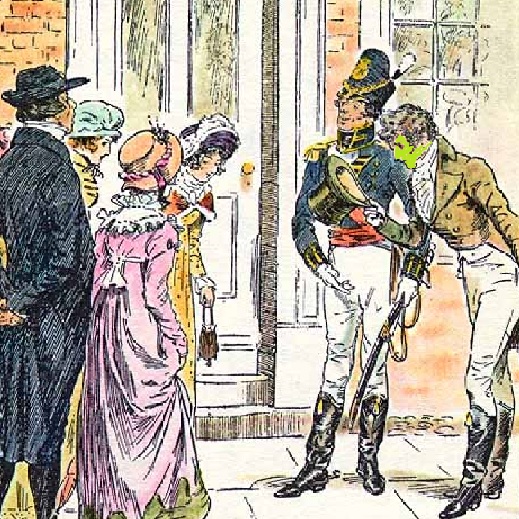
In copyright law, several entities may own different rights in the same piece of material.  One way this might happen is one someone builds upon the work of another and creates a derivative work.  The original work’s author may still own the rights to the original work, but the newer author now has rights on … Read more

A Trip to The Public Domain

Most creative works are protected by copyright for a very long time, but not all and not forever.  Those works not protected are said to be in the public domain.  Once in the public domain, others can use the works without needing to obtain permission from (or pay royalties or license fees to) the owner … Read more